Products
Use cases
Industries
Resources
Company
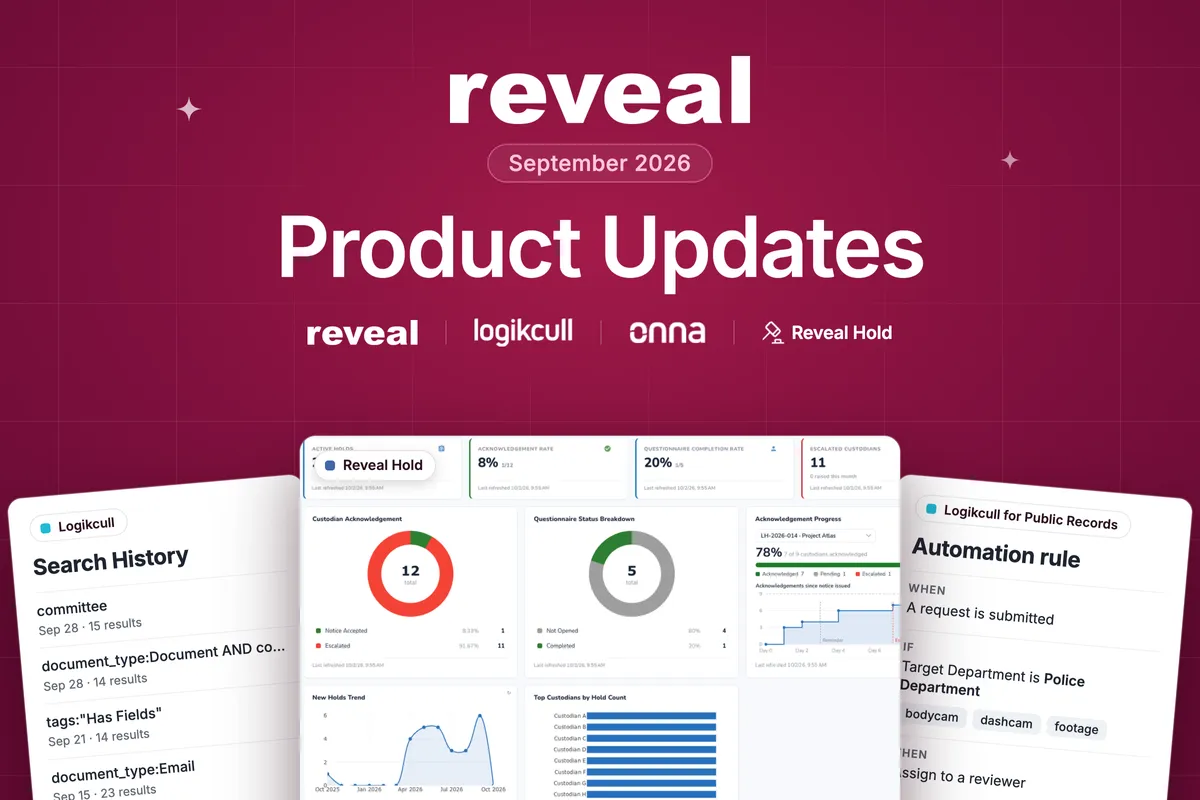
Fall is here, and this month's release calendar should give you pumpkin to talk about.
Here is the September roundup: the month's highlights in plain language, from records requests that sort themselves in Logikcull for Public Records to new Reveal Hold dashboards that show your hold progress at a glance.
Let's get into it.
Every matter has one: the 50 GB PST holding a decade of email, three reorganizations, and every "Reply All" ever sent.
Large PST files now run from start to finish with less friction. Duplicate emails and attachments stay linked to the right original, with consistent dates and folder paths across each email family, including attachments tucked inside forwarded messages. Your imports also keep moving past a single unresolvable file or system contention instead of stopping for a manual restart.
Read the full Reveal release notes
Somewhere, someone is trying to remember the exact search string they ran in June. They wrote it on a sticky note. The sticky note is gone.
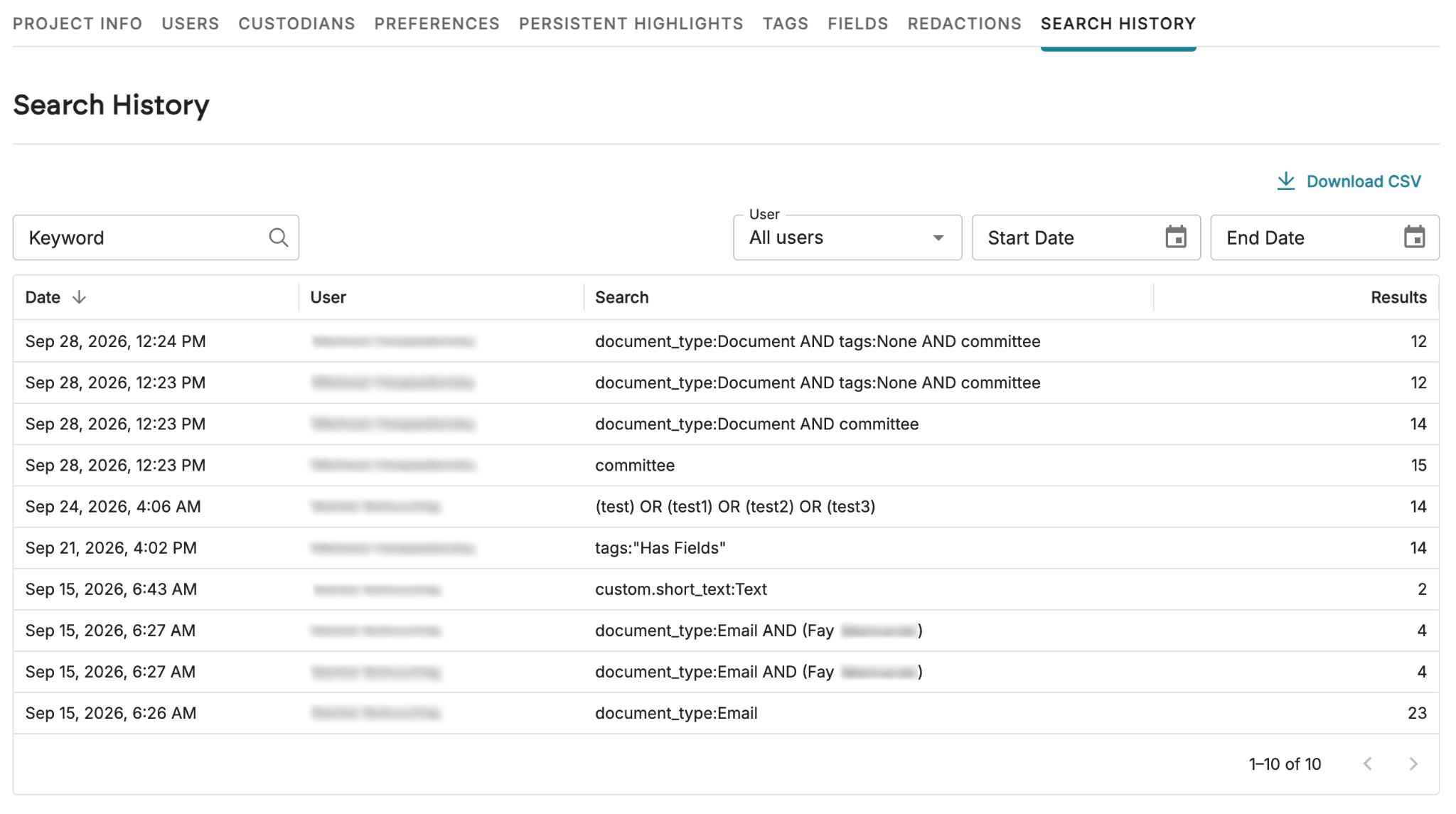
But wait! Now, every search you run through the Search Bar or Search Builder lands in a Search History log under Project Settings. It records who searched, what they searched for, when, and how many results came back. You can filter by keyword, user, or date range, and export the log as a CSV.
Read the full Logikcull release notes
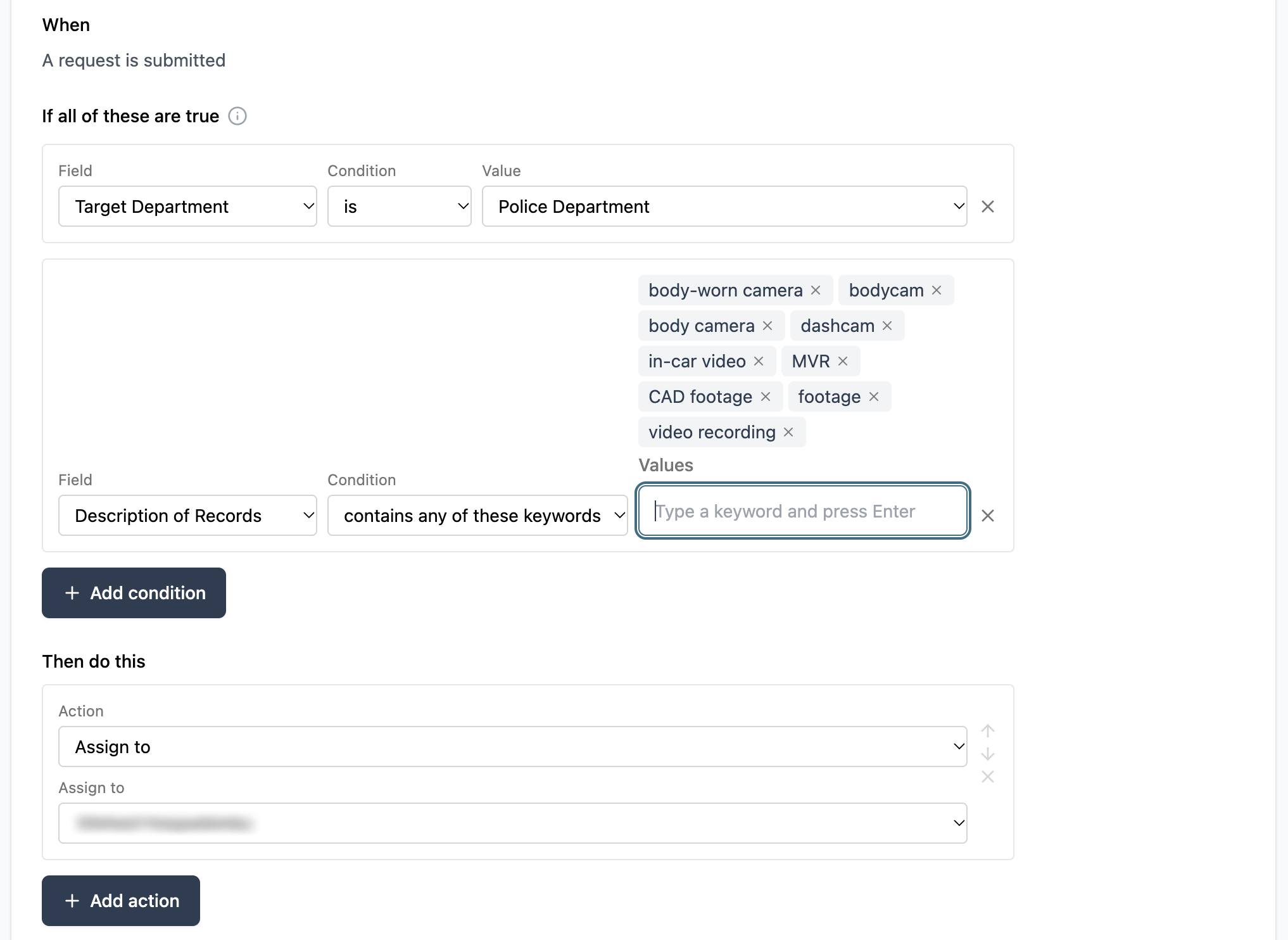
Admins of our request intake portal can now build rule-based automations that act the moment a request is submitted. Based on the department, the requester's state, or keywords in the description, you can assign reviewers and locations, apply labels, set due dates, send emails, or add internal notes. Templates cover common scenarios like commercial requestors and budget requests.
You set the rule once, and the sorting takes care of itself.
Nothing says "public service" like a three-week email thread about a $12.50 copying fee.
So now, a new Payments tab on our intake portal lets Admins turn on the payment methods they want. They can paste a manual payment link, have Stripe insert a link that confirms payment automatically, or let Stripe handle invoicing and reminders directly.
Invoices support USD, EUR, GBP, CAD, and AUD. The fee notice and the payment button now live in the same place.

Also in Logikcull for Public Records:
Read the full Logikcull for Public Records release notes
An email sent in 2019 and collected Tuesday is not six days old. Your retention policy can now agree.
Admins can now base a retention policy on the date content was created at the source instead of the date Onna ingested it. For backfilled data, those two dates can be years apart. The option appears for connectors that reliably provide a source date.
Existing policies stay unchanged, legal hold still takes precedence, and the policy only affects Onna's copy.
Step one: find out whose token the Jira connector runs on. Step two: find that person. Step three: find a time on their calendar. Step four: wait.
That cumbersome workflow is fixed with the Jira and Confluence connectors, which now support Atlassian service accounts alongside classic tokens, covering issues, pages, comments, versions, and attachments. Scoped tokens limit access to only the Confluence spaces you need. Collections keep running no matter who's in the office that week.
Also in Onna:
Read the full Onna release notes
Issuing the hold in one tool and collecting the Slack messages in another is how a Tuesday task turns into a Thursday task.
Reveal Hold can now collect Slack Enterprise Grid and Zoom Workplace data for your custodians, right from the hold. Set a date range and collect each custodian's Slack or Zoom content in one step, with Slack direct messages selectable on their own.
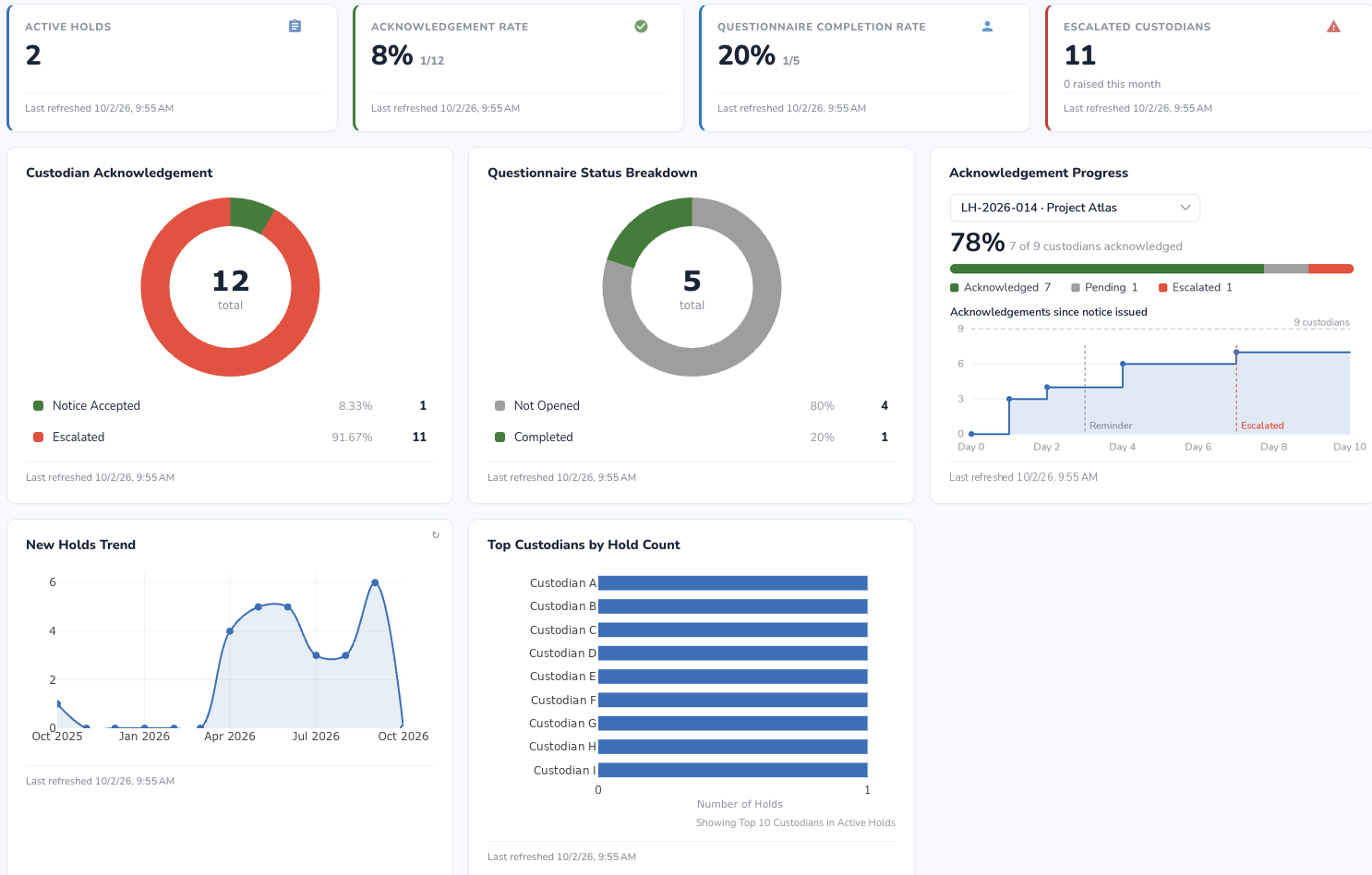
Somewhere, a pivot table built to answer "how many custodians have acknowledged?" can now be put out of its misery.
The new Dashboards, under Analytics, show acknowledgement and questionnaire progress across the holds you manage, and how hold activity is trending over time. Filter by time period, and create your own views for the metrics you check most.
Also in Reveal Hold:
Read the full Reveal Hold release notes
Here is a look at what our teams are building next:
Adaptive Objects will let you define your own structured objects and link them straight to your documents and workflows, so the platform finally speaks your matter's language instead of forcing your matter to speak eDiscovery. More on this soon!
Soon, instead of delivering fully withheld pages as a wall of solid black, you'll be able to replace them with a slipsheet that lists each withheld page alongside its exemption codes and the reason it was held back.
Custom fields in the request intake portal are getting an upgrade too, moving beyond plain text to real types like dates, dropdowns, and hyperlinks, so your metadata stays structured and searchable instead of free-form.
Search in Place keeps expanding. After launching on Slack, you'll soon be able to search and preview at the source across more of your connectors before you collect, so right-sizing a collection becomes the default, not the exception.
Custodians already have enough questions when a legal hold lands in their inbox. "Who is this?" no longer has to be one of them.
A new email integration type is coming: connect a Microsoft 365 shared mailbox and send hold notices from one consistent, recognizable legal team address.
Some of this month's releases started as a customer saying, "It would be great if…"
Got some of those wishes as well? Don't hold them back. Share them here, browse the full release notes for everything that shipped this month, or tell your Customer Success Manager directly.
Thanks for helping us shape what ships next!