Products
Use cases
Industries
Resources
Company

It’s Thursday afternoon, and after a quiet week a big matter lands on your desk. The data you need is scattered across a dozen collaboration apps. From product brainstorming boards in Miro to communication records in Slack, relevant data is everywhere. The volume dwarfs your last case, and the client contract says certain data points cannot leave a specific regional jurisdiction.
There’s one decision upfront that determines the course of the entire case. Where will this matter run? By that, we mean: will it run on privately deployed or on-premises software, or in the cloud?
In the 2026 eDiscovery Buyers Report: AI and Deployment Trends, private and on-premises deployment showed up as an increasingly popular choice for legal technology deployment.
Private deployment is when your eDiscovery review platform runs on infrastructure that stays single-tenant and under your control. The eDiscovery Buyers Report sorted deployment into three types.
"Private deployment" refers to the second and third together, because both keep your environment single-tenant and under your control. Run more than one of these at the same time and you have a hybrid model. In a hybrid model, each matter goes to the environment that best fits its cost, regulatory, and infrastructure needs.
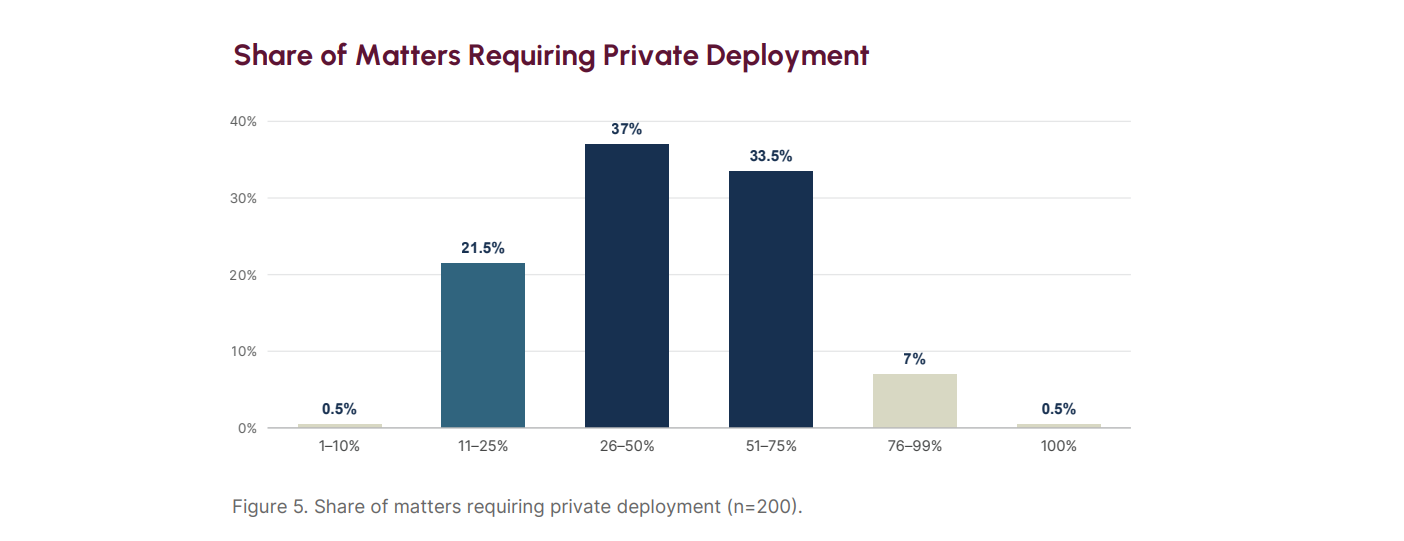
On average, 46% of matters already require private or on-premises deployment today. That’s nearly half the work, and that number is only rising. 91% of buyers say the share of matters requiring private deployment has risen over the past 24 months, with 29% describing the increase as significant.
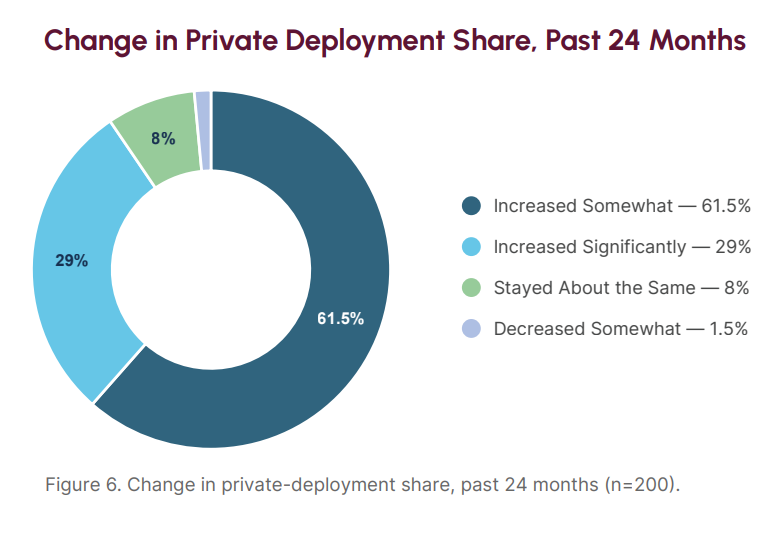
This increase is driven by two factors: cost and obligation.
eDiscovery costs have grown about 20% a year over the last three years, and organizations report that their data doubles on average every 21 months. The mass adoption of AI tools promises to steepen that curve, since every AI-assisted chat, transcript, and generated draft becomes potentially discoverable material. Under consumption-based models tied to data volume, that growth converts directly into spend. And so many teams would rather run heavy workloads on infrastructure they control, where costs aren’t tied as tightly to volume.
The second driver is obligation. 77.5% of buyers rate regulatory or data sovereignty requirements as an important factor in deployment choice. These obligations tend to be matter-specific and rarely negotiable. When a regulation like the European GDPR or a client mandate dictates where data must sit, cloud preference does not override it. You need a deployment option that can meet the requirement, not a single destination that hopes the requirement never comes up.
With those obligations in mind, you can see why buyers are skeptical of a one-size-fits-all answer. Looking forward, hybrid approaches are growing in popularity: 48% of survey participants expect to run a hybrid approach within 24 months, either retaining their current mix or moving to a mix of models, and no single deployment model commands a majority.
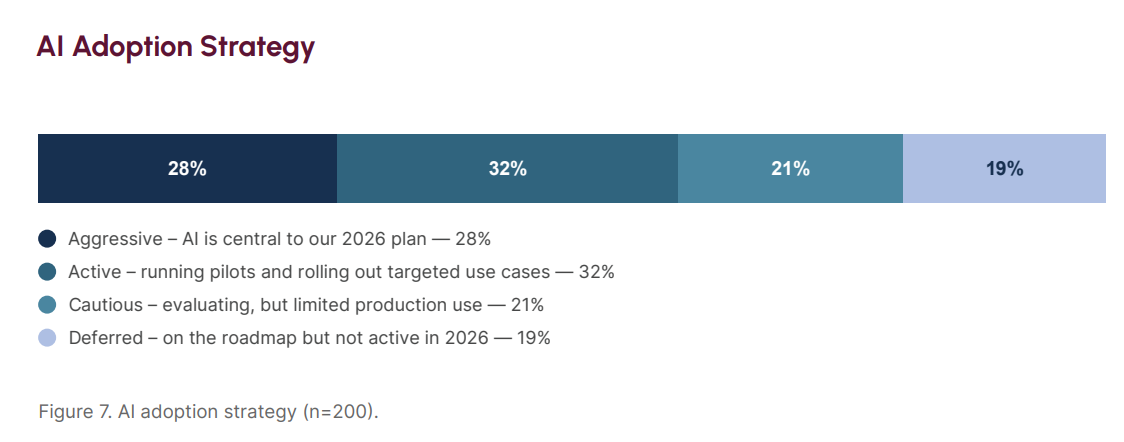
The goal is not to pick the one right place for every matter. The goal is to be able to place each matter where it belongs.
You do not need to rebuild everything at once. You need a plan that treats deployment as a variable you control, matter by matter. Here is a practical path.
Nearly half of your matters may already belong somewhere other than the public cloud, and that share is rising, which makes deployment flexibility a decision worth making on purpose. Reveal Private Deployment gives you the full Reveal platform on infrastructure you own and control, across private cloud or bare metal on premises, so you can place each matter where its cost, security, and data requirements point. To see how RPD is built for that reality, visit revealdata.com/rpd.
Private cloud is a single-tenant environment dedicated to your organization, hosted either by the vendor or inside your own cloud account. On premises is infrastructure your organization owns and operates in its own data center. Both keep the environment under your control and are often grouped together under the umbrella term "private deployment."
No. Regulation and data sovereignty are major drivers, and 77.5% of buyers rate them as important decision-making factors when it comes to deployment. But cost predictability, security posture, and control over AI data are pushing a much broader set of organizations toward private and hybrid models. On average, 46% of all matters now require private deployment.
It should not. The concern that private deployment means older or weaker tools is out of date. Platforms built for this reality run the same AI and analytics privately that they run in the cloud, so you can keep advanced capabilities on infrastructure you control.
A hybrid model runs more than one deployment type at once, sending each matter to the environment that best fits its cost, security, residency, and AI requirements. 48% of buyers expect to run a hybrid approach within 24 months.
Data volume is the main driver. Organizations report their data doubles on average every 21 months, and eDiscovery costs have grown about 20% a year over three years. AI adoption adds fuel, since AI-generated content becomes discoverable and increases the volume that must be processed and reviewed.

.png)